


 SkilzHub Certification
 Adobe Certification
 Google Certification
 Meta Certification
 Semrush Certification
 Hubspot Academy Certification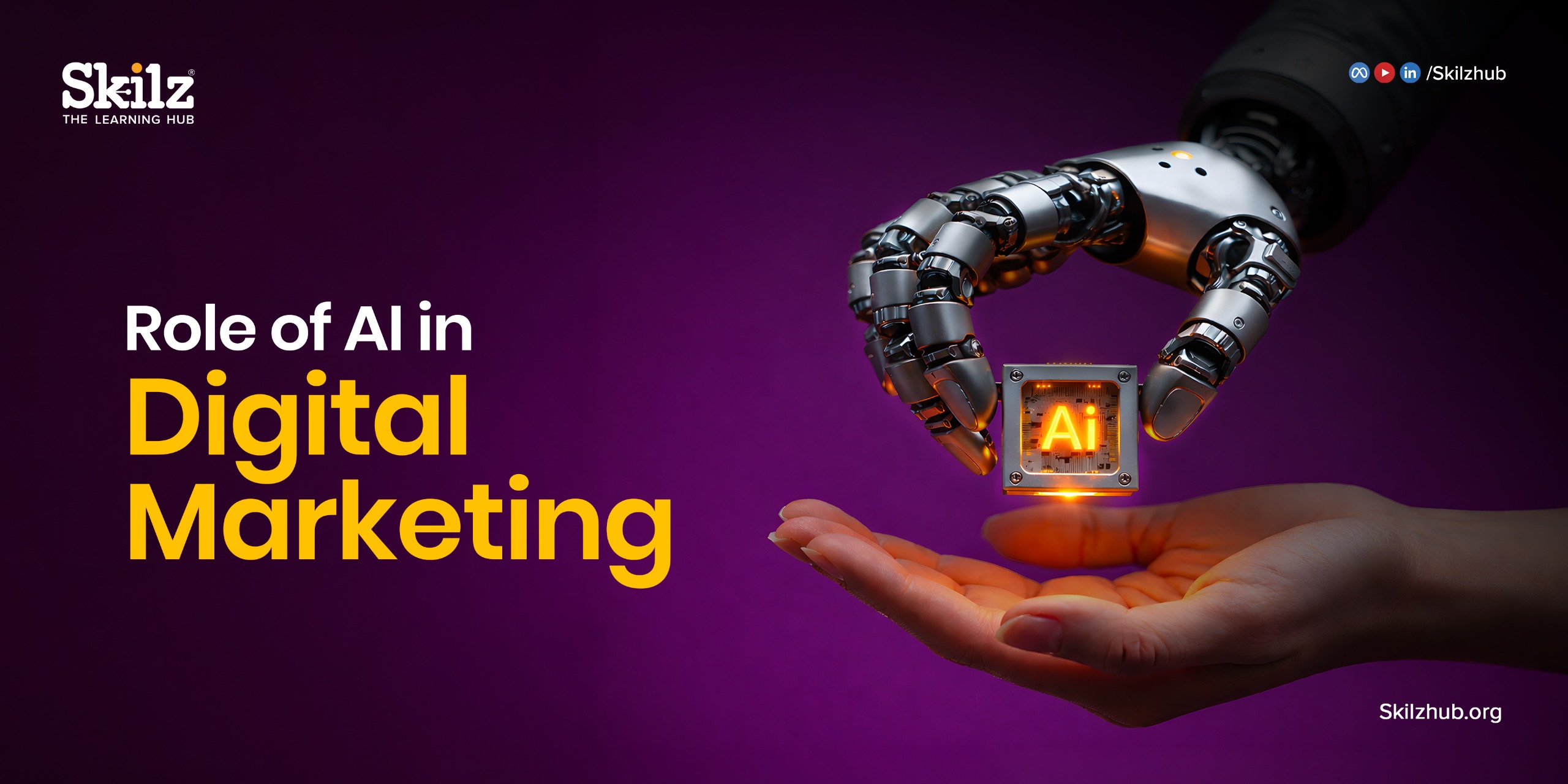
Role of AI in Digital Marketing: Practical Use Cases
In 2026, AI is no longer a “nice-to-have” in digital marketing—it is the operating system behind high-performing brands. Companies that still treat AI as an experiment are already behind. Below are the most practical, real-world use cases of AI in digital marketing today, explained clearly and without hype.
1. Hyper-Personalized Customer Experiences
AI analyzes user behavior across websites, apps, emails, and social platforms in real time. In 2026, personalization goes far beyond using a customer’s name. AI predicts what a user wants next, when they want it, and the best channel to deliver it, resulting in higher conversions and lower drop-offs.
Impact: Higher engagement, better retention, less wasted spend.
2. AI-Driven Content Creation (Human-Guided, AI-Powered)
AI now assists marketers in creating blogs, ad copies, landing page text, images, and even short videos faster and at scale. In 2026, smart teams use AI for drafting and optimization, while humans handle strategy, tone, and brand voice.
Impact: Faster content production without increasing team size.
3. Predictive Analytics for Smarter Decisions
Instead of guessing campaign outcomes, AI predicts them. It analyzes past performance, audience behavior, seasonality, and market signals to forecast results before money is spent.
Impact: Fewer failed campaigns, more data-backed decisions.
4. Advanced Chatbots & Conversational AI
Modern AI chatbots in 2026 are context-aware, multilingual, and integrated with CRM systems. They don’t just answer questions; they qualify leads, recommend products, recover abandoned carts, and book appointments 24/7.
Impact: Always-on customer support and increased sales without extra staff.
5. Automated & Intelligent Paid Advertising
AI now fully manages bidding, audience targeting, creative testing, and budget allocation across platforms. It continuously learns and reallocates spend toward what actually converts.
Impact: Maximum ROI with minimal manual intervention.
6. Smarter SEO & Search Intent Optimization
AI understands search intent, not just keywords. In 2026, SEO is driven by AI-powered keyword clustering, content gap analysis, and algorithm adaptation, keeping brands visible despite constant search engine updates.
Impact: Sustainable organic traffic and stronger search rankings.
7. Behavioral Email & Lifecycle Marketing
Emails are no longer sent based on schedules but on user behavior. AI decides when to send, what to send, and to whom based on predicted actions.
Impact: Higher open rates, better conversions, fewer unsubscribes.
Conclusion
In 2026, AI has shifted digital marketing from intuition to intelligence. It replaces guesswork with precision, delays with speed, and waste with efficiency. Businesses that adopt AI strategically reduce costs, scale faster, and outperform competitors. Those who ignore it are not playing safe; they are choosing to fall behind.

Comments (0)
Please login to leave a comment.
No comments yet. Be the first to comment!