


 SkilzHub Certification
 Adobe Certification
 Google Certification
 Meta Certification
 Semrush Certification
 Hubspot Academy Certification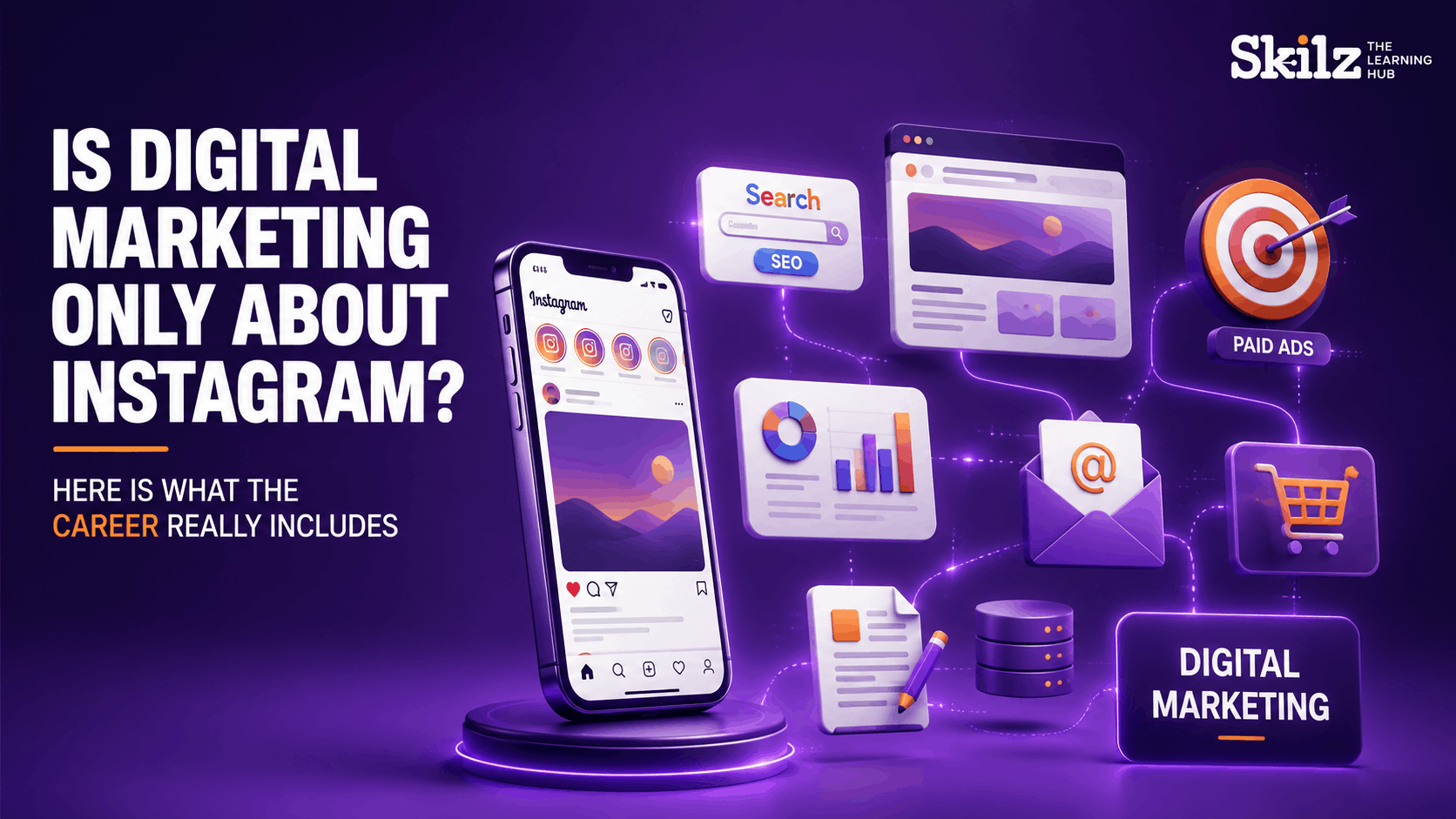
Is Digital Marketing Only About Instagram? Here Is What the Career Really Includes
Ask someone what a digital marketer does, and the answer will often be “They manage Instagram pages.” It is understandable. Reels, posts, captions and influencer promotions are the parts of marketing that people see every day.
But Instagram is just one channel. A digital marketing career can involve search engines, websites, online advertising, content writing, email campaigns, e-commerce, customer reviews and data analysis. Some digital marketers rarely work on Instagram at all.
So, what does the career actually include? Let’s look at the different areas and the type of work involved in each one.
Social Media Is More Than Posting Regularly
Managing a social media page is not simply about uploading a poster every day. Before creating content, a marketer needs to understand the business, its customers and what the brand wants to achieve.
One post may be designed to introduce the brand. Another might promote a product, collect enquiries or bring visitors to a website. The format, caption and call to action will change depending on that purpose.
A social media marketer may plan content calendars, coordinate with designers, write captions, respond to comments and study how people react to each post. They may also manage paid campaigns through Meta Ads.
This area includes roles such as social media executive, content planner, community manager, influencer marketing coordinator and Meta Ads specialist.
SEO Helps People Find Businesses on Google
Suppose someone searches for a nearby course, restaurant, diagnostic centre or service provider. The websites appearing in the search results did not reach those positions by accident. In many cases, SEO work helped them get there.
Search Engine Optimisation involves improving a website so that Google can understand its pages and show them for relevant searches.
An SEO professional researches keywords, improves website content, checks technical issues, builds internal links and studies search performance. Local SEO is another part of the work. It helps businesses become more visible to customers searching within a particular location.
SEO suits people who enjoy research, writing, websites and problem-solving. It also teaches patience. Search rankings rarely improve overnight, so the work involves regular checking and steady improvement.
Google Ads Brings Businesses in Front of Ready-to-Buy Customers
SEO focuses on unpaid search visibility, while Google Ads allows businesses to promote themselves through paid campaigns.
When someone searches for a product or service, a relevant advertisement can appear at the top of the results. Google Ads can also be shown on YouTube, shopping results and other websites.
Running these campaigns takes more than choosing a budget and clicking “publish.” A Google Ads specialist must select the right keywords, write clear ad copy, choose locations and audiences, track conversions and control spending.
They also need to know what to change when a campaign is not performing well. Sometimes the keyword is too broad. In other cases, the ad message, landing page or audience may need improvement.
This field may appeal to people who like testing ideas, working with numbers and seeing how small changes affect results.
Performance Marketing Focuses on Results
Performance marketing is closely connected to paid advertising, but its main focus is the result produced by the campaign.
That result could be a lead, sale, phone call, registration, download or app installation. Instead of judging a campaign only by likes or views, a performance marketer looks at whether it delivered something useful to the business.
For example, an advertisement may receive plenty of clicks but very few enquiries. The marketer then needs to find out what went wrong. Was the audience unsuitable? Was the offer unclear? Did the landing page fail to build trust?
Performance marketers monitor figures such as cost per lead, conversion rate and return on advertising spend. The job needs creative thinking, but it also requires comfort with data.
Content Marketing Is Not Limited to Blog Writing
Blogs are an important part of content marketing, but they are not the whole picture.
Content can take many forms: website pages, videos, case studies, social posts, email newsletters, product descriptions and downloadable guides. The purpose is to answer questions, explain a service, build trust or encourage the reader to take the next step.
A content marketer first tries to understand what people want to know. They then choose a suitable topic and format.
This area offers opportunities for content writers, SEO writers, copywriters, scriptwriters and content planners. Strong research skills matter, but the writing itself does not need to sound complicated. Clear and useful content usually works better than paragraphs filled with difficult words.
Email Marketing Keeps the Conversation Going
Someone may visit a website or enquire about a service without making an immediate decision. Email marketing helps businesses stay in contact with such people.
Businesses use email to introduce services, share offers, send reminders, follow up on enquiries and reconnect with previous customers.
An email marketer may write subject lines, prepare email content, group contacts by interest and check how many people opened or clicked each email. They may also create automated email sequences.
For example, a person who submits an enquiry form can receive a welcome email. Someone who adds a product to an online cart but leaves without buying may receive a reminder later. These messages are planned in advance and sent according to the customer’s actions.
Website Knowledge Makes a Marketer More Capable
A digital marketer does not need to become a full-time developer. However, understanding how websites work is a major advantage.
Many marketers use WordPress to publish blogs, create landing pages, update content and make basic SEO changes. Some also learn basic HTML and CSS so they can handle small edits without depending on a developer every time.
Website knowledge is especially useful when running campaigns. An advertisement may bring plenty of visitors, but a slow, confusing or poorly designed page can cause them to leave.
A good marketer looks beyond the advertisement and checks the entire journey; from the first click to the final enquiry or purchase.
Analytics Shows What People Actually Do
Digital marketing is measurable. Marketers can check where website visitors came from, which page they viewed and whether they clicked a button, submitted a form or completed a purchase.
Tools such as Google Analytics, Google Search Console and Google Tag Manager help collect this information.
A marketer may use the data to answer practical questions:
Which campaign generated the most enquiries?
Which blog brought visitors from Google?
Where did users leave the website?
How many people clicked the WhatsApp button?
Which landing page produced better results?
Analytics helps marketers make decisions based on real behaviour rather than guesswork. It is a good area for people who enjoy working with numbers and finding patterns.
Online Reputation Can Influence a Customer’s Decision
Before contacting a business, many customers check its Google reviews and social media comments. A few unanswered complaints or incorrect business details can affect their decision.
Online Reputation Management involves monitoring what people say about a brand and responding appropriately. It may include handling reviews, replying to feedback, tracking brand mentions and keeping business information accurate across online platforms.
The way a company responds matters. Even when a complaint cannot be solved immediately, a calm and helpful reply can show other customers that the business takes feedback seriously.
E-commerce Marketing Brings Several Skills Together
Online stores need more than attractive product photos. They need people to find the store, trust the brand and complete a purchase.
An e-commerce marketer may work on product pages, shopping advertisements, SEO, email reminders, promotional campaigns and customer-retention plans. They also study why shoppers leave without purchasing and what could encourage them to return.
This field combines content, paid advertising, website optimisation and analytics. It can be an interesting career path for anyone who wants to work with online stores, marketplaces or consumer brands.
Digital Marketing Also Involves People and Planning
Knowing how to use marketing tools is useful, but the job is not entirely technical.
Marketers working in agencies often speak with clients, understand their requirements, prepare proposals, plan campaigns and explain reports. They may also coordinate with writers, designers, video editors and developers.
As a person gains experience, communication, time management and decision-making become just as important as platform knowledge. A good marketer must be able to explain what is happening, why a particular approach was chosen and what should be done next.
What Jobs Are Available in Digital Marketing?
There is no single role that covers the entire field. Companies usually hire people based on a particular skill or a combination of related skills.
Common digital marketing career opportunities include:
SEO executive
Social media executive
Content writer
Google Ads specialist
Performance marketer
Email marketing executive
E-commerce marketer
Marketing analyst
Digital marketing strategist
Account manager
These roles are available in digital agencies, IT companies, educational institutions, healthcare organisations, retail brands, e-commerce businesses and start-ups. People with a good portfolio can also explore freelancing and remote work.
How Can You Find the Right Area for You?
You do not have to select a specialisation before starting a digital marketing course. Begin by learning how the main channels work and try them through practical assignments.
If you enjoy writing and research, SEO or content marketing may suit you. If you like visual ideas and audience interaction, social media could be a better fit. If campaign numbers and testing interest you, performance marketing or analytics may feel more natural.
Working on real websites, advertisements, content calendars and campaign reports makes it easier to identify your strengths. You may also discover that you enjoy a role you had never considered before.
Learn More Than Social Media Posting
A useful digital marketing course should show students how the different channels connect. Learning only to create posts is not enough for someone planning to build a serious career in the field.
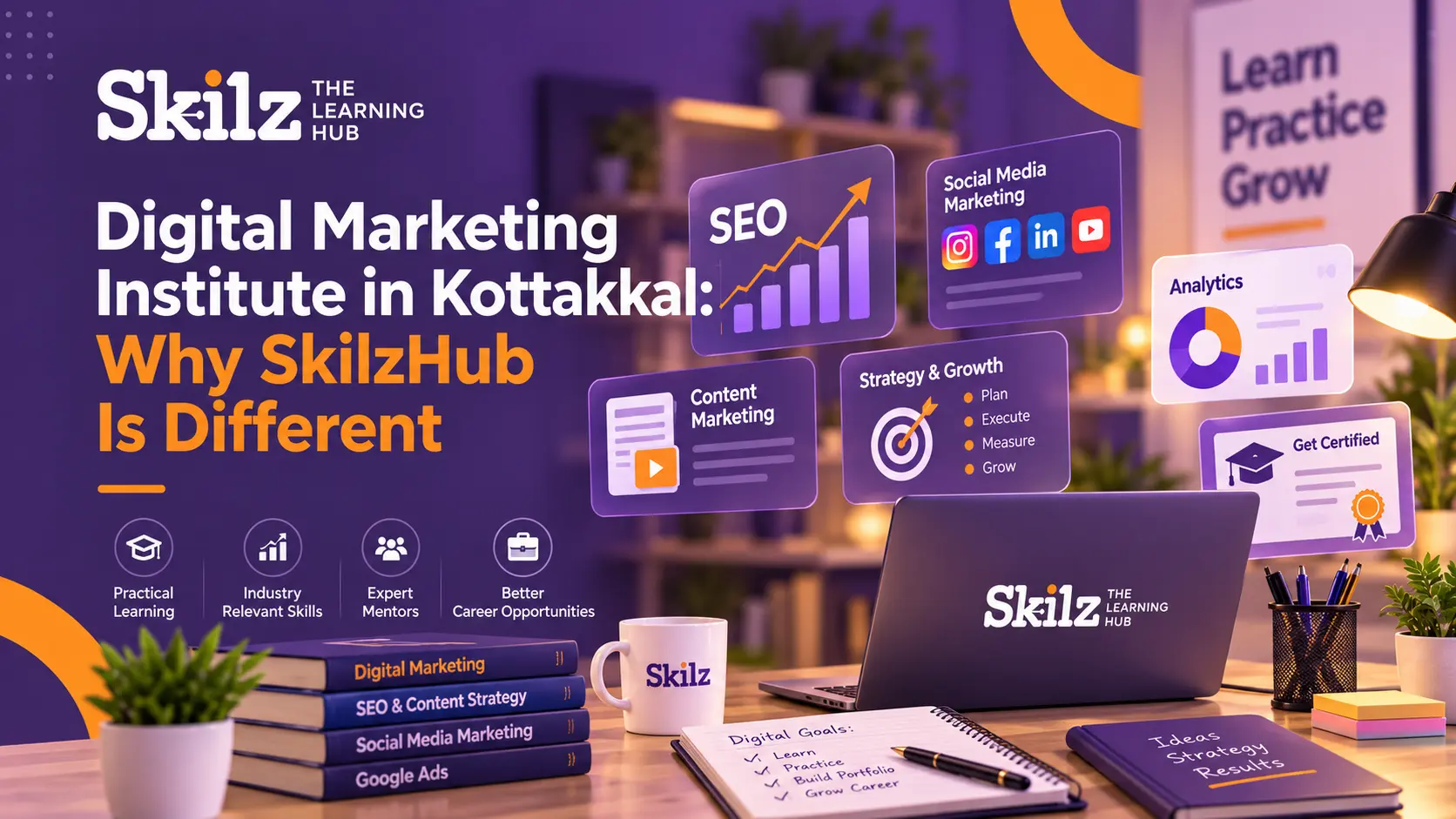
SkilzHub’s Digital Marketing Course in Perinthalmanna covers SEO, social media marketing, Google Ads, performance marketing, content marketing, WordPress, analytics, automation and strategy planning.
Students also work on live projects and receive agency exposure, portfolio support and interview preparation. This gives them a better understanding of how digital marketing is handled for actual businesses.
Instagram may be where many people first notice digital marketing, but it is only one part of the job. Behind every successful online campaign, there may be a writer creating content, an SEO professional improving search visibility, a performance marketer studying results and a strategist deciding what the business should do next.



Comments (0)
Please login to leave a comment.
No comments yet. Be the first to comment!